среда, 14 ноября 2018 г.

LED Light Bulbs for Home

Tips To Consider Before Buying Led Light Bulbs for Home

Light Emitting Diodes (LED) are known as solid semiconductors. This is because, it converts maximum amount of energy into electricity and not into heat.  Basically, LEDs have revolutionized the whole concept of lighting by replacing the incandescent and fluorescent. 

The Environmental Protection Agency known as EPA along with other governmental agencies are asking the consumers to switch to green lighting, i.e., leds. It has been so named, because LEDs are eco-friendly, as it has reduced the amount of carbon emission, thereby reducing the risk of depletion of ozone layer. Another important feature of Light Emitting Diodes is that, they can be easily Recycles. It follows the principle of 3R's , i.e.,  Reduce, Recycle,Reuse. 

LED Flood Lights


One might be thinking that, “ Why is there so much hype about the LEDs? ” Basically, LEDs contain numerous benefits, because of which they are becoming popular.
  • First and foremost, the light emitting diodes are known for being far more efficient than the incandescent or the fluorescent. They are helping the consumers to reduce the electrical consumption by 80-85%.
  • Most importantly, as they require less energy to lighten up, thus helping the consumers to save their money on the electricity bill.
  • Another important feature is that, the consumers can get wide range of led accessories, which consists of energy saving products, lamp sockets, light-fixtures. Hence, using led's along with these accessories can help the consumers in saving energy and also reducing the electricity bill up to a great extent.
  • Then they are also eco-friendly in nature. This means that, it does not contain any harmful waste materials within them, nor do they emit any harmful UV rays like the incandescent or fluorescent.
  • Another important feature for which consumers are widely switching to led light bulbs for home is that, they do not need to be replaced frequently like the CFLs or the incandescent lamps.
led light bulbs for home


Tips To Remember Before You Buy LEDs For Home Use:-

Mentioned, here are certain tips which needs to be kept in mind before consumers venture out to buy led bulbs:- 

First and foremost one should check the time span of the warranty. If a company is in business for a short time, but offering a long time warranty, then it would be better to avoid those companies. It is always better to go for those companies who offers 2-5years of warranty, so that one can get their help when needed the most.

Secondly, it is also mandatory to check the particular company's return policy for the product. As the non-perishable product always comes with a return period, during which one can get the refund. The customers should find the return policy to be simple and easy, i.e.,the consumers should be able to return the product within 30 days of purchase.

Sometimes the consumers are using LED Flood Lights. The floodlights are not only used for commercial purposes only. It is also being widely used in residential sector for security purposes. The floodlights are known for offering bright illumination of light. With a wide beaming angle, it helps in spreading the light over a wider space.

In the lighting market consumers can easily find wide variety of led light bulbs for home use. Some of the popular led light bulbs are B15,  B22, E14, E27, G4, G9. The most important fact is that they are easily available for the consumers in various shapes, sizes, forms, designs. Most of these lights are categorized as 'retrofit.' This implies they will swap straight over together with your existing bulb fixtures without having the want for rewiring. 

So, consumers can choose accordingly the led light bulbs that are suitable for their home and also that fits the surrounding.

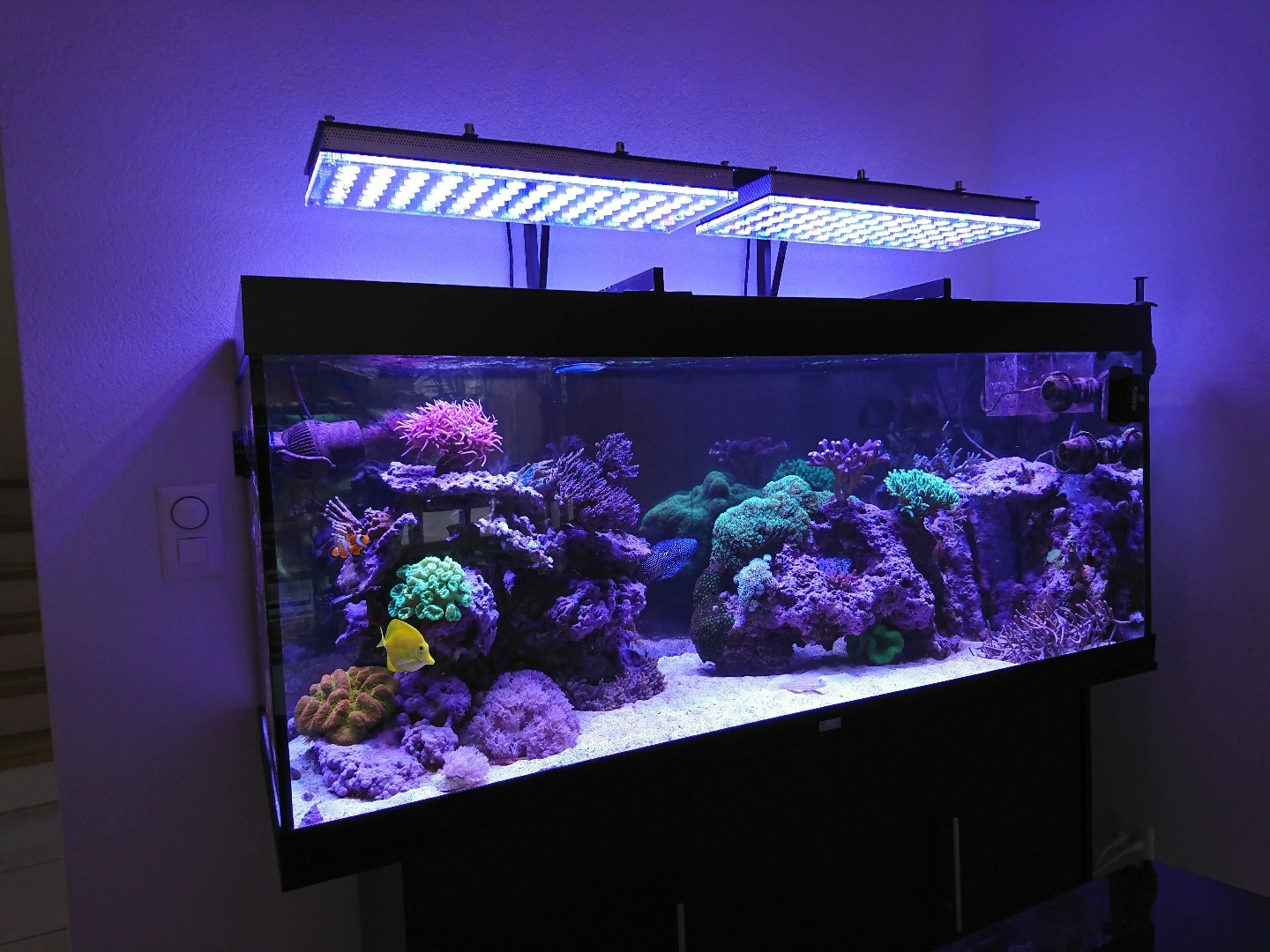
Choosing Your Aquarium Lighting

Choosing Your Aquarium Lighting


Many people become totally frustrated when trying to grow aquatic plants because they only seem to last a month or two before the leaves fall off and the stems begin to rot. Some people even think this is the normal way of growing plants in the aquarium! Not so! Any plant if grown under the right conditions can last for many years!
The most critical thing for continued plant growth is lighting, which is also the chief reason why plants fail in the first 30 to 60 days. Plants require a certain light intensity in order to generate photosynthesis and grow. Over-fertilization does not make up for poor lighting, neither does extended light periods.
For all tanks but very small ones, the lighting that comes with standard aquarium set-ups is inadequate. Plant species fall into three general light categories: low light level, moderate light level, and bright light level. Light intensity is measured in lumens, but to simplify things a general rule of thumb of watts per gallon has been established. Low light is considered to be a minimum of 1.5 to 2 watts per gallon of water, while bright light levels are 3 or more watts per gallon of water. Moderate is somewhere in between two and three. Shallow tanks such as a ten gallon can get by with less. Stem or "bunch" plants which are cuttings, require a bright light in order to take root and grow. Most however are extremely fast growers with the right amount of light. Many rosette or rooted plants such as Swords require either moderate or low light levels.
3 watts per gallon! How do I get that many light bulbs over my tank? 
Tanks under 55 gallons can be a challenge. There are fluorescent strip fixtures made for the aquarium that can sit on top of a glass cover. Cheaper alternatives are fluorescent cabinet or shelf light fixtures, and for 48" long tanks you can use dual tube 48" shop-light fluorescent fixtures that run around $8 at local hardware stores.
High Intensity Lighting 
Another alternative is high intensity lighting such as VHO fluorescent and Metal Halide. VHOs are around triple the wattage of standard fluorescent and require a special ballast that can handle the high wattage. VHOs give an even light displacement across the tank, and run cooler than Metal Halide.
Metal Halide is a high wattage spot light that can attach to a wooden hood or hang suspended above an open tank. Each bulb covers about a four foot square area. They generate a large amount of heat which needs to be ventilated by fans in a closed system.
MH comes in the following wattages: 70 Watt, 100 Watt, 150 Watt, 175 Watt, 250 Watt, 400 Watt, 1000 Watt.
Not all of these wattages may be available in a full spectrum.
Power Compact Fluorescent 
Since this article was originally written, power compact fluorescents have advanced and become the most preferred choice for upgrading lights.
These U-shaped bulbs are brighter than standard fluorescents, but are much more compact in size, allowing much higher wattage/more intensive light to be used in small places. Retrofit kits can be attached easily to a homemade hood or canopy. The typical ballast powers one or two bulbs, and is small enough to hide away easily.
Standard size PC bulbs are 9 watt, 13 watt, 28 watt, 36 watt, 55 watt, and 96 watt. Customsealife has come out with a 65 watt bulb.
There are two lamp base styles: German and Japanese, each with different pin settings. They are not interchangeable
Color Spectrum or Kelvin 
The term Kelvin designates the color spectrum of the light bulb. A "full spectrum" bulb is anything between 5000k and 6500k. This has nothing to do with brightness, and bulbs that are very high in the color spectrum, (10,000k) have no value to plant growth. Standard fluorescent, VHOs, and MH all come in full spectrum.
Shy fish and bright light 
This issue should be taken into account while planning your set up. Dark hiding places, dark gravel, dither fish, and tall plants providing shade will help to comfort shy fish such as Apistogrammas and Discus in a brightly lit tank.
Symptoms of insufficient light:
- plants weak and frail 
- leaves pale green to yellowish 
- stems thin 
- rosette plants have small leaves on weak stalks 
- stem plants have few leaves and widely spaced, long internodes 
- close to the light source growth is vigorous and compact, lower stems barren, (this can also happen  in brightly lit tanks when plants are crowded together so enough light does not reach the lower stems)
Light intensity in relation to CO2 (quote by Sean Murphy, Fisheries / Wetlands Biologist)
"Intensive light creates a higher photosynthesis rate in plants then does moderate or low levels of light. OK, basic botany, Plants use light and CO2 to create sugars via photosynthesis, they use the sugars and O2 for respiration, synthesis, and growth. For some reason higher plants retard respiration and growth in tissues that are actively photosynthesizing, (ever wonder why a plant bends towards a light?). Active photosynthesis also assists the plant in the uptake of nutrients. The easy pathway for aquatic plants to obtain CO2 is when it is dissolved in water. The hard way is from the stripping of CO2 from bicarbonate dissolved in the water.
"Problem 1: 
High levels of photosynthesis require an adequate level of CO2 to maintain the process. If no CO2 is added to an intense light situation, the bicarbonates will be stripped leaving a free -OH molecule to combine with free +H (making H2O) that was set free when carbonic acid (dissolved CO2) dissociated. If there is another source of bicarbonate other then carbonic acid then +H made available from other acids will be removed from solution to compensate for the increase in -OH. When the +H is taken up like this the pH rises. By not adding CO2 the pH swings in a limited body of water (aquarium) become quite large.
"Problem 2: 
Algae does not have a restriction on respiration during photosynthesis, when the plants start to slow down the photosynthetic pathways due to the lack of CO2, the uptake of nutrients also slows down. Algae take advantage of this situation taking up valuable nutrients while the higher plants are struggling for CO2. Algae bloom.
'Aquariums are a balancing act, if you can find the right balance of light and CO2 addition then you should have an easier time maintaining a beautiful tank. If optimum growth is a goal you really need to cover the bases. If only good growth is a goal then you can do less intensive gardening, i.e. no CO2additions, under a moderate light source."

LED Light Bulbs for Home

Tips To Consider Before Buying Led Light Bulbs for Home Light Emitting Diodes (LED) are known as solid semiconductors. T...